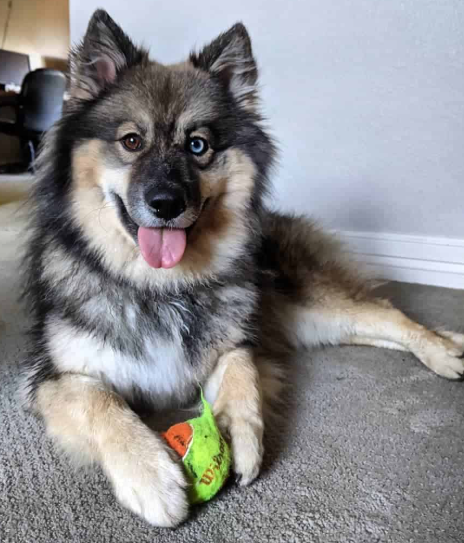
Keeshond Husky
Designer Mixed Breed - Keeshond x Siberian Husky - Arctic Spitz Companion
35-65 lbsWeight
17-23 inHeight
12-14 yrsLifespan
Gray, Wolf Gray, Black and SilverColors
Designer Mixed Breed - Keeshond x Siberian Husky - Arctic Spitz Companion
The Keeshond Husky is a designer crossbreed that blends two distinct dogs: the Keeshond, a fluffy Dutch companion spitz, and the Siberian Husky, a tireless Arctic sled dog. Breeders combine the two hoping to pair the Keeshond's best traits — sociable, people-focused temperament — with the Siberian Husky's boundless stamina and a striking, wolfish look, all in one companion.
As a first-generation mix, the Keeshond Husky is not a standardized breed, so puppies — even littermates — can vary in size, coat, and personality depending on which parent they take after. Most are large dogs, typically weighing around the range shown above. The best way to picture an individual Keeshond Husky is to get to know both parent breeds.
As a first-generation mix, the Keeshond Husky is not a standardized breed, so puppies — even littermates — can vary in size, coat, and personality depending on which parent they take after. Most are large dogs, typically weighing around the range shown above. The best way to picture an individual Keeshond Husky is to get to know both parent breeds.
Keeshond Huskys tend to be friendly, affectionate, and outgoing — and, from the Siberian Husky side, energetic, friendly, and independent. From its Keeshond parent it often inherits a sociable, people-focused temperament, while the Siberian Husky contributes boundless stamina and a striking, wolfish look. The blend usually makes an affectionate, family-oriented companion, but because temperament can lean either way, early socialization and consistent, positive handling are important to bring out the best of both parents.
This is an energetic mix that needs a solid hour or more of vigorous exercise every day, plus mental challenges to stay happy. Long walks, running, active play, and training games all help burn off its energy — without enough outlet it can become bored and destructive.
Grooming is moderate: a brush once or twice a week keeps the coat healthy, with more attention during seasonal shedding. Bathe occasionally, and keep up with nail trims, ear checks, and tooth brushing.
The Keeshond Husky responds best to patient, consistent, reward-based training and early socialization. Short, upbeat sessions work better than repetition or heavy correction. Establishing clear, kind boundaries early helps it grow into a well-adjusted companion.
Mixed-breed dogs often enjoy some 'hybrid vigor,' but the Keeshond Husky can still inherit any of the health conditions common to its parent breeds. Owners should be aware of hip dysplasia, patellar luxation, hypothyroidism, and eye conditions such as cataracts. Buying from a breeder who health-tests both the Keeshond and the Siberian Husky parents, keeping your dog at a healthy weight, and staying current with routine veterinary care are the best ways to support a long, healthy life.
| Stage | Daily Amount | Notes |
|---|---|---|
| Puppy | 1-2.5 cups | 3 meals/day |
| Adult | 1.5-3 cups | 2 meals/day |
| Senior | Reduce 10-20% | Joint support |
| Expense | Cost |
|---|---|
| Puppy | $500-$1,500 |
| Monthly Food | $50-$85 |
| Annual Vet | $400-$900 |
Both parent breeds have thick double coats that blow twice yearly. Keeshond Huskies produce extraordinary amounts of fluff during shedding season - enough to fill pillows.
The Keeshond is the national dog of the Netherlands, historically kept on barges as companions. Combined with Husky Arctic heritage, the Keeshond Husky is a remarkable cross of working traditions.